Home/Solutions/AI Data Centers
Primary focus
PCIe infrastructurefor the AI era.
In an AI server, PCIe links CPUs, GPUs, DPUs, NICs and NVMe. Those links run hot and congest under load. Datafabrix makes them visible and predictable, and plans their maintenance.
Conceptual illustration
Every device, one observable fabric.
DFX-G7 sits on every path between hosts and devices. Device mix varies by platform.
Bandwidth came first. It is no longer enough.
Dense AI racks fail in three expensive ways: they overheat, a component degrades, or a link congests. Each of these stalls a job that may have run for days.
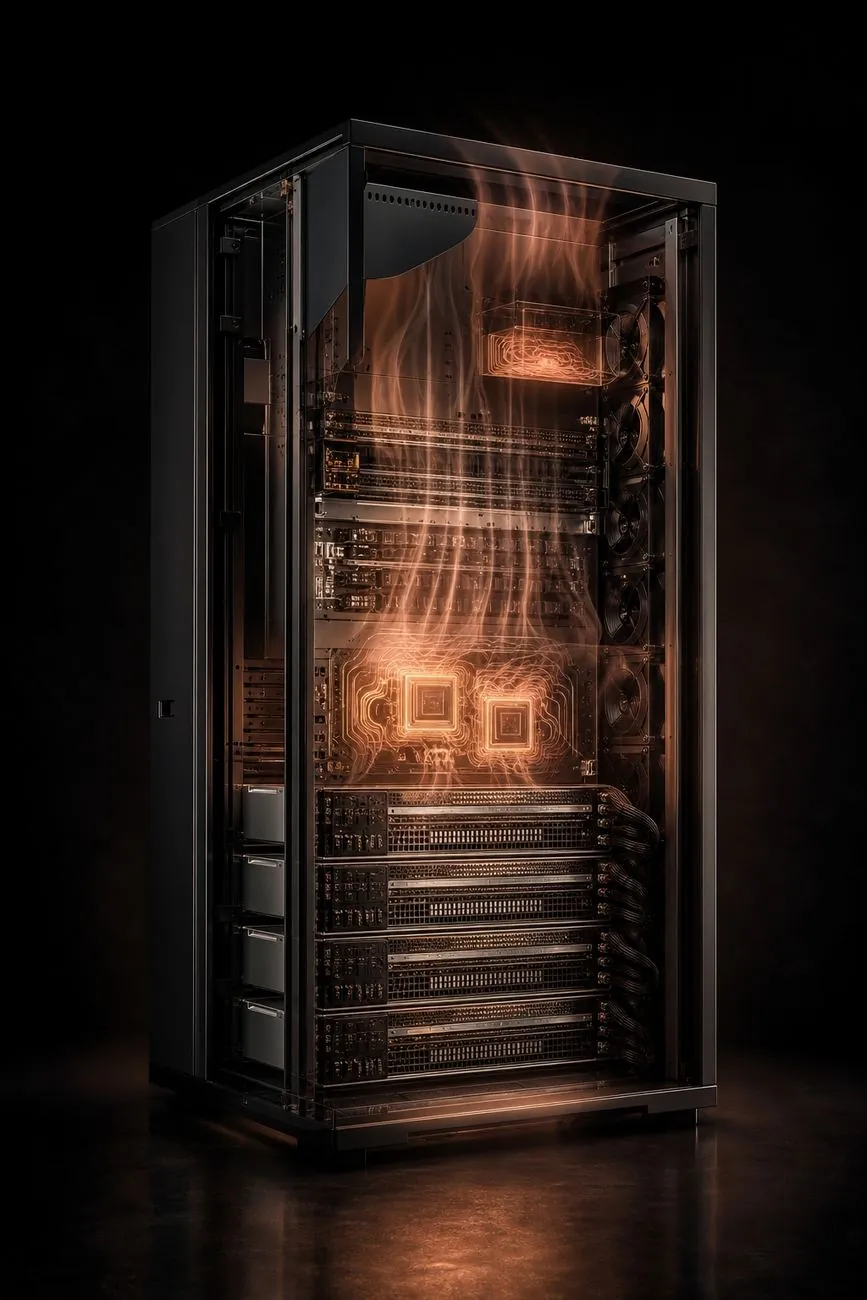
Thermal throttling
GPUs and NVMe throttle silently when a bay runs hot. Forecasting hotspots lets cooling and placement change first.
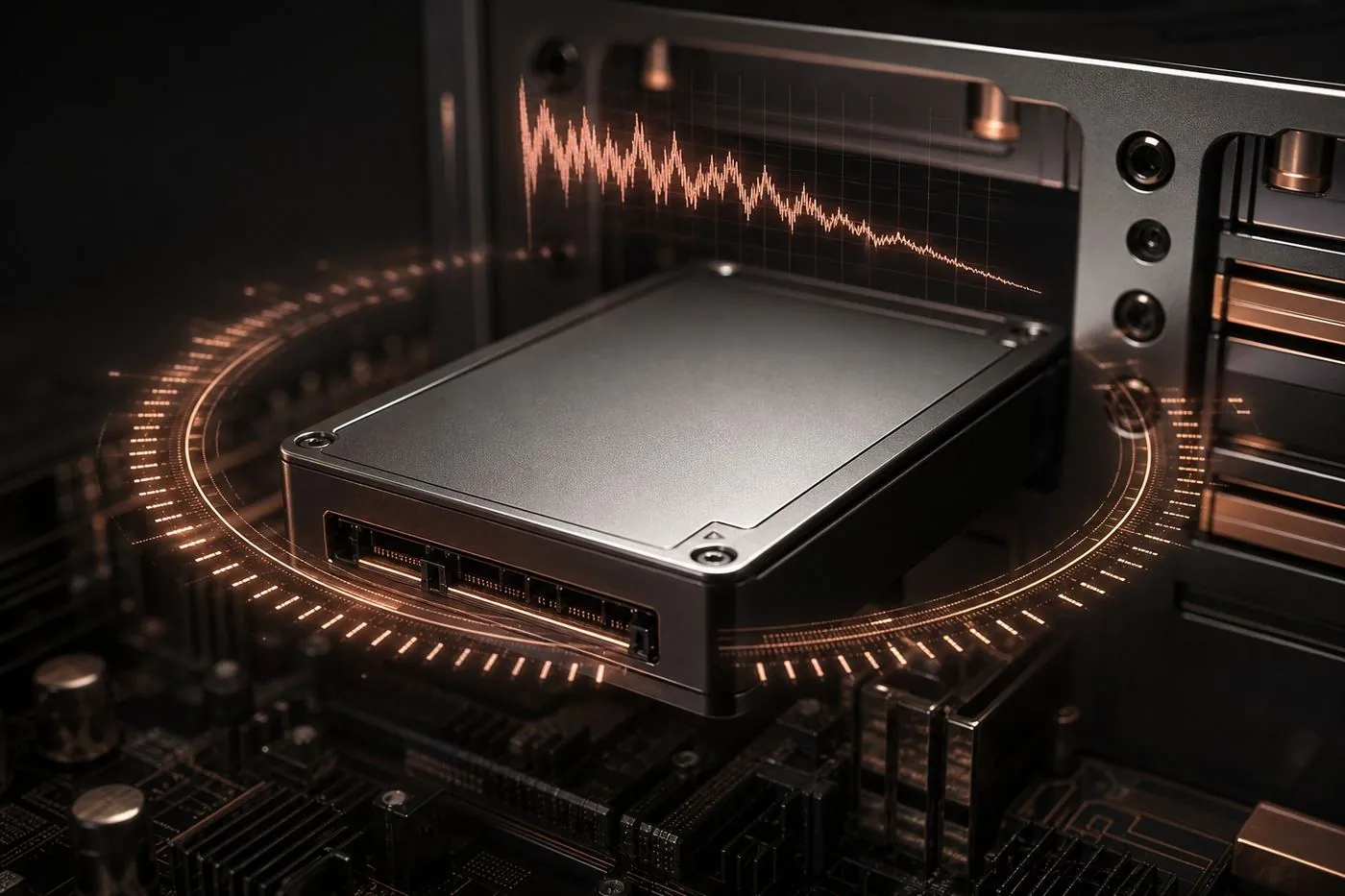
Degrading links and drives
Marginal Gen7 channels and aging SSDs give early signs. Catching them prevents mid-training checkpoint restarts.
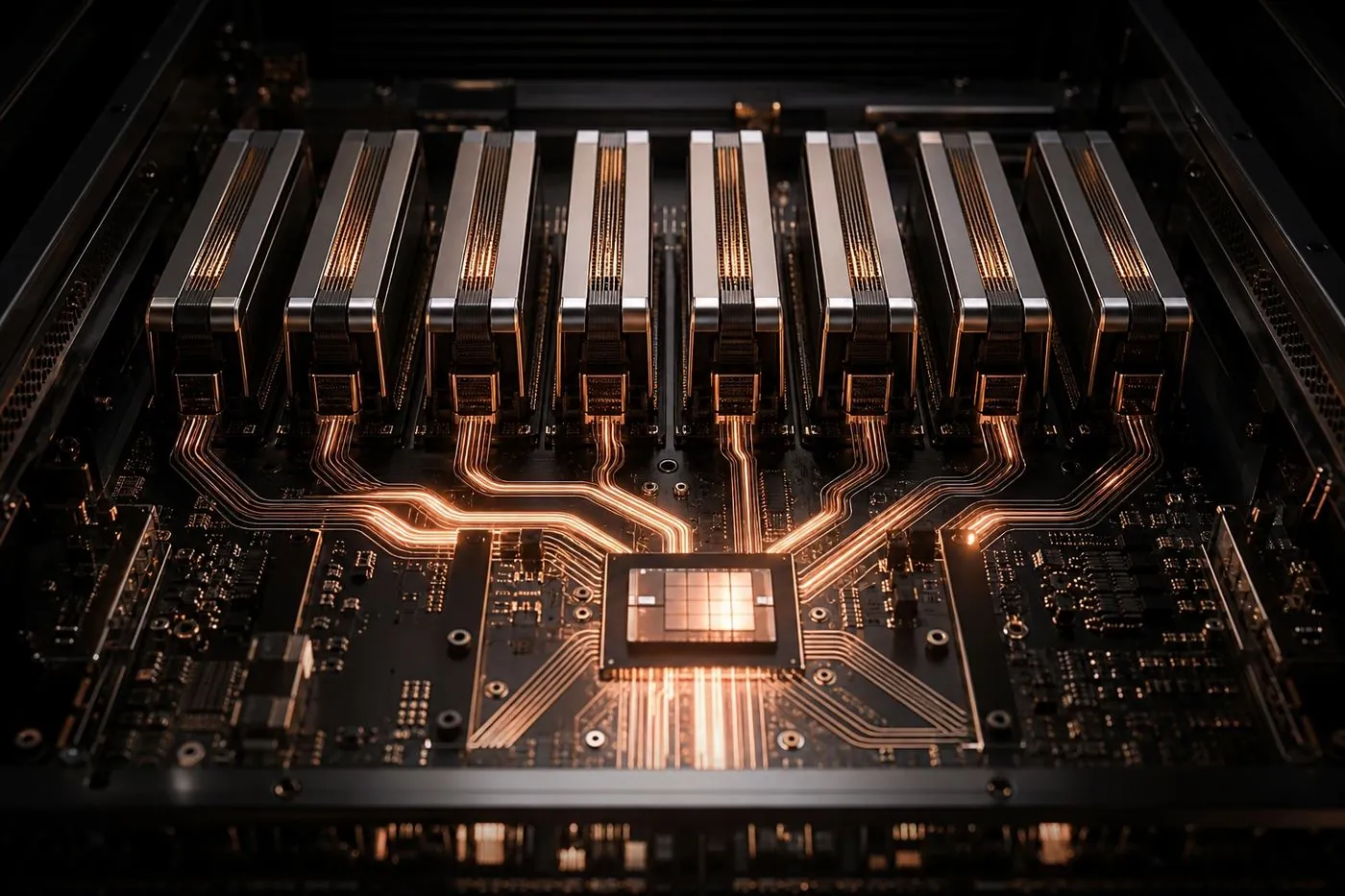
Fabric congestion
Collective operations are only as fast as the slowest link. Predicting congestion keeps the tail short.
The fabric in the middle of everything.
Hosts and accelerators.
Confidential sensing per bay.
Storage, scale-out and offload.
Fleet prediction and planning.
Gen7 switching with on-switch AI, at the center of all four.
Designing AI systems around PCIe Gen7?
Share your topology. We will walk through how DFX-G7 fits.