Home/Products/Smart Backplane
Predictive system platform
The backplane thatreports before it fails.
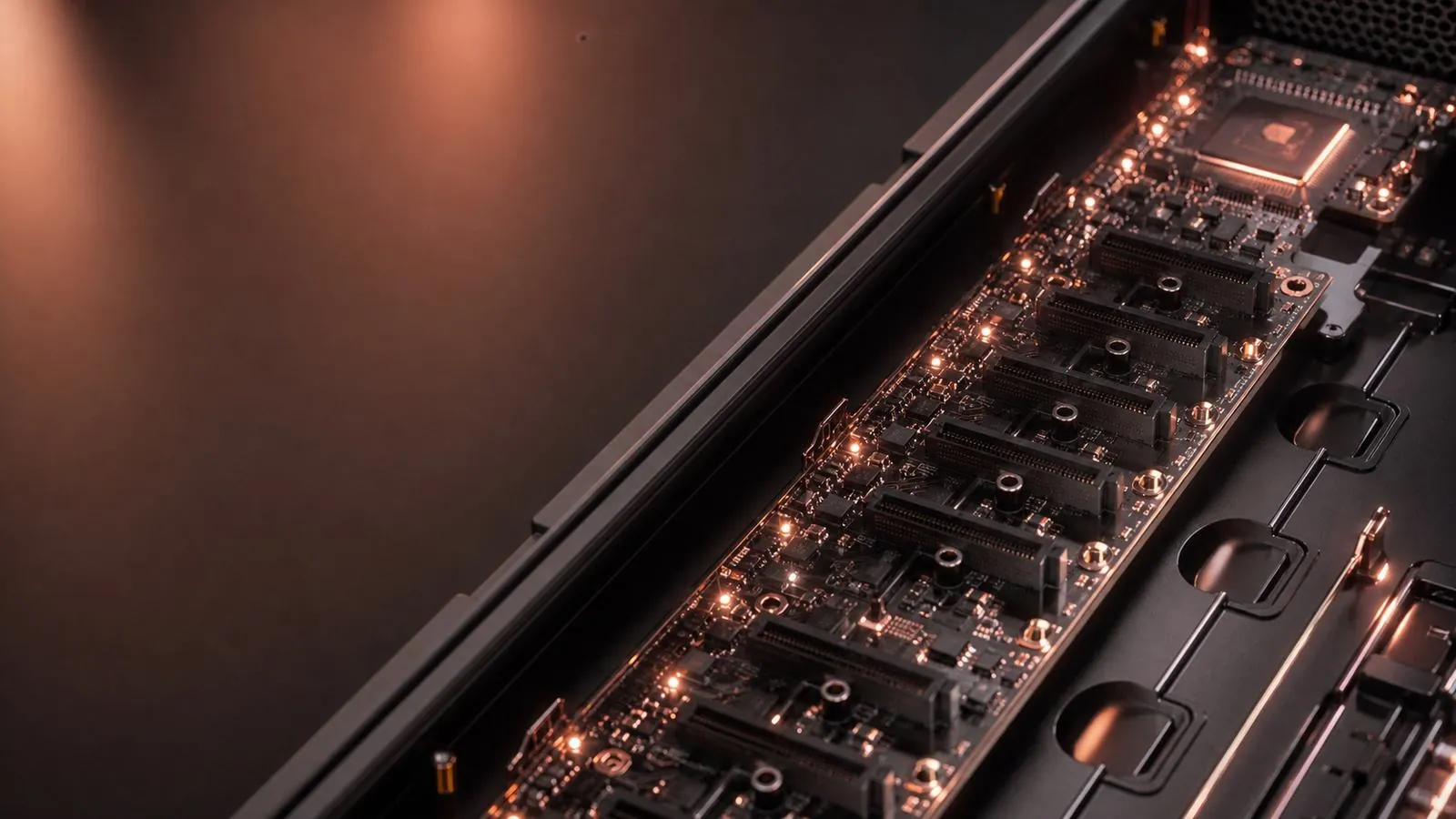
A PCIe and NVMe backplane with a confidential sensor fabric. It streams per-bay temperature, power, airflow and device health to the DFX-G7, where AI predicts thermal risk, faults and load, so data-center maintenance becomes predictive, not reactive.
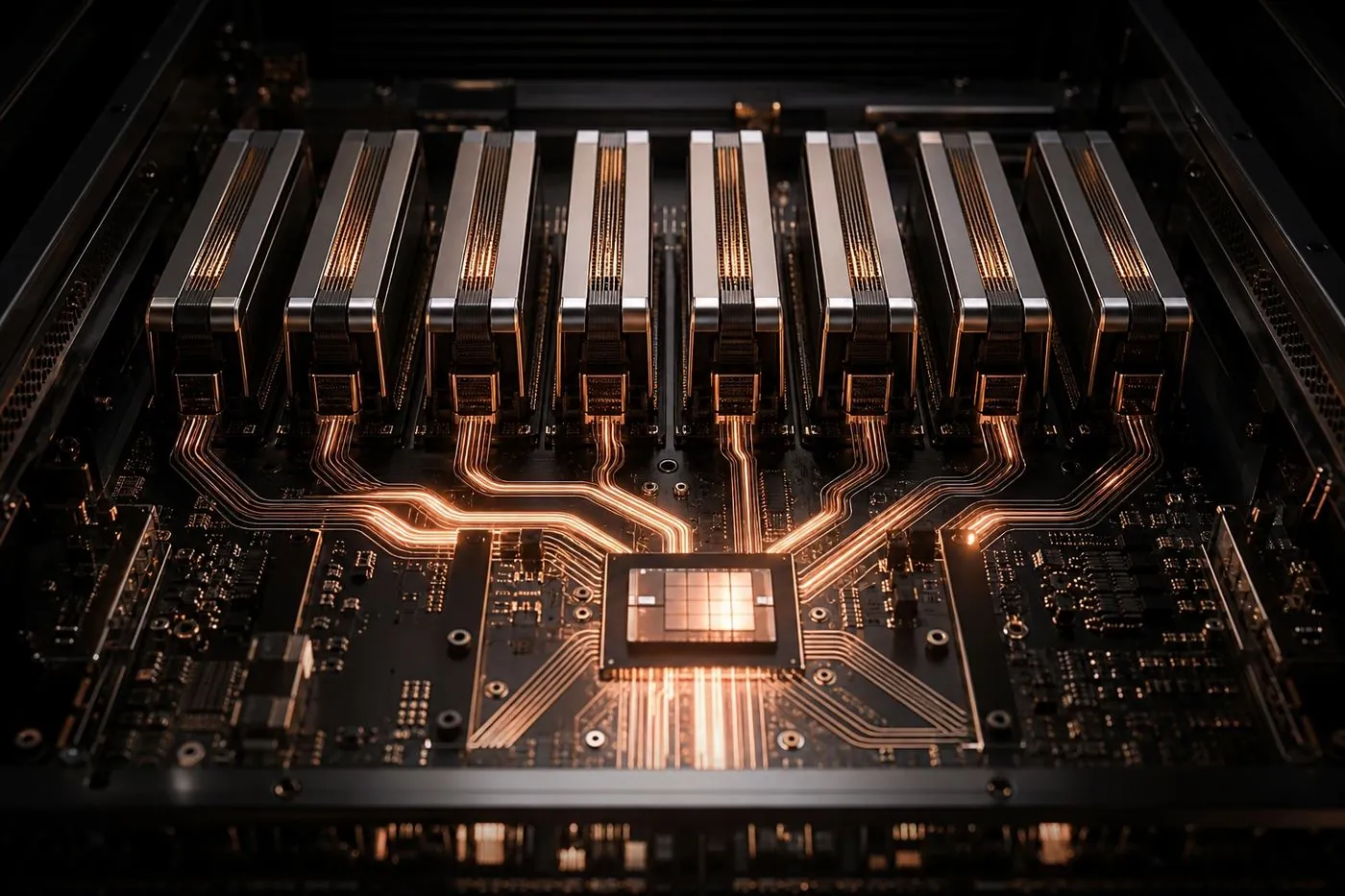
Conceptual illustration
A private nervous system for every board.
Sensors are spread across the backplane, at every bay, connector, power stage and airflow path. They report over a dedicated, isolated channel to DFX-G7, not over the host's data path.
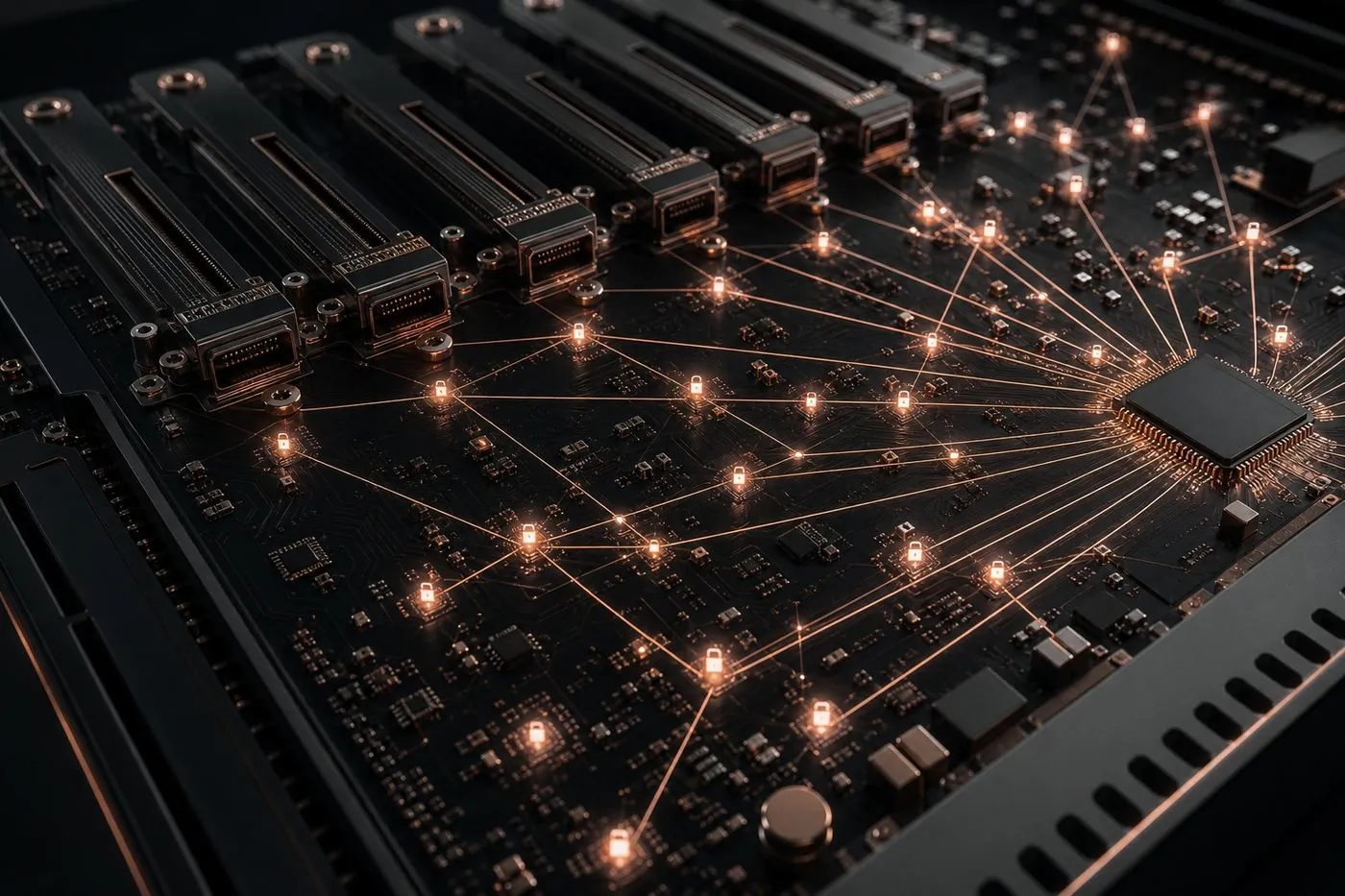
Telemetry that cannot be read, spoofed or tampered with.
Health data reveals a lot about a system: workload intensity, failure state, even what is installed. The sensor fabric is being designed so that this data travels only between the board and the switch, and is trusted when it arrives.
- Physically separate path. Out-of-band from host PCIe traffic, so tenants and host software cannot see or inject sensor data.
- Authenticated sensors. Each node is identified, so a spoofed reading is rejected rather than acted on.
- Encrypted in transit. Sensor frames are protected end to end, from the board to DFX-G7.
- Policy-controlled export. Only the features and alerts the operator allows leave the switch for DCIM.
Every bay, measured and mapped.
Switch the overlay to see temperature, power, PCIe traffic, device health and anomalies across a 24-bay concept board.
Bay and inlet temperature
Per-bay and per-zone sensing for hotspot and airflow analysis.
Voltage and current
Rail-level power per bay, catching drift and inrush anomalies.
Airflow and fans
Flow and fan state to tell blocked airflow from a failing device.
Drive and link health
SMART logs, link width and speed, retrains and error counters per slot.
Concept visualization with simulated values. Bay count and layout are illustrative.
Sensor data in. Predictions out.
The backplane does the sensing. DFX-G7 does the thinking. Joining physical sensor data with fabric telemetry is what makes each prediction specific enough to act on.
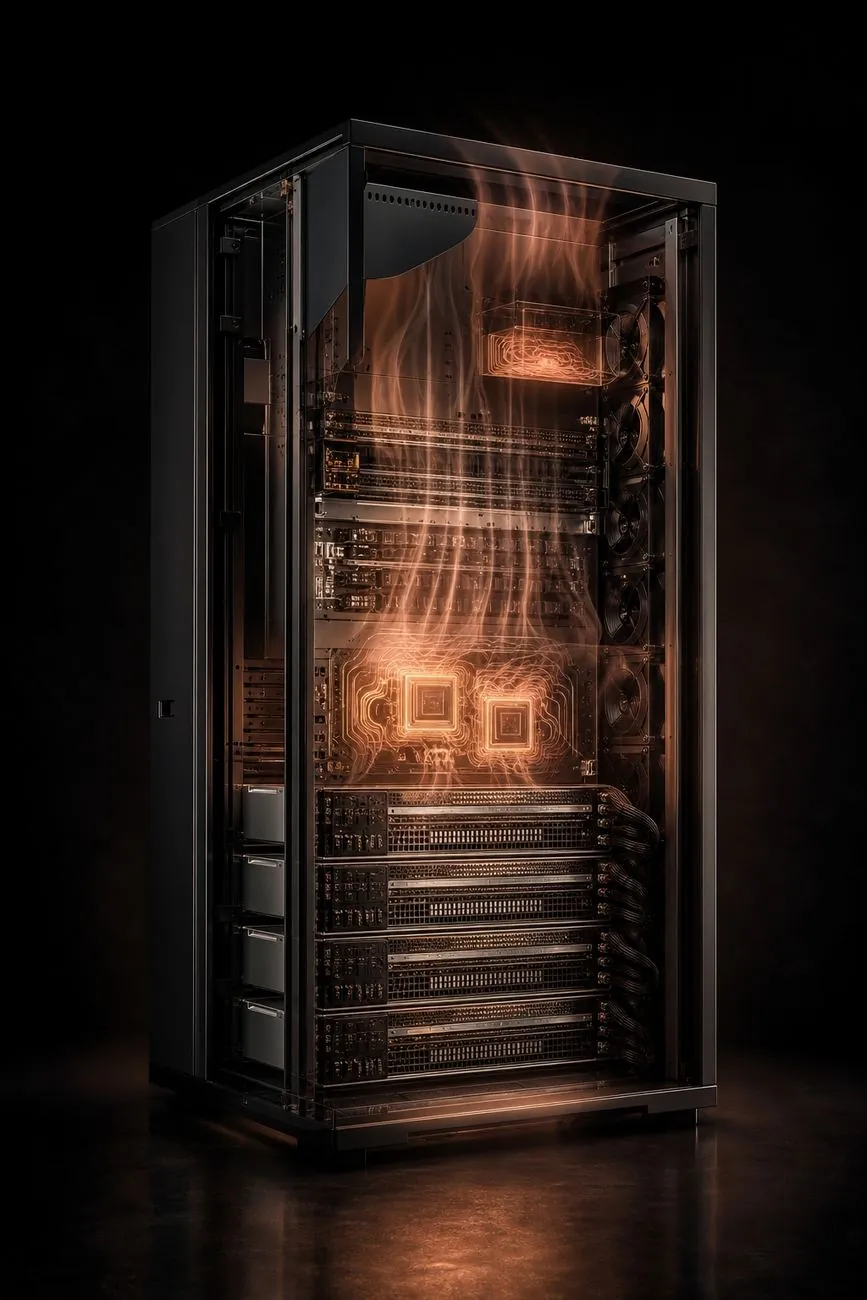
Hotspots, hours ahead
Bay temperature trends are combined with traffic and power on each slot. The model forecasts which bays will cross their thermal limit, and when.
- Result
- Cooling adjusts and load shifts before throttling
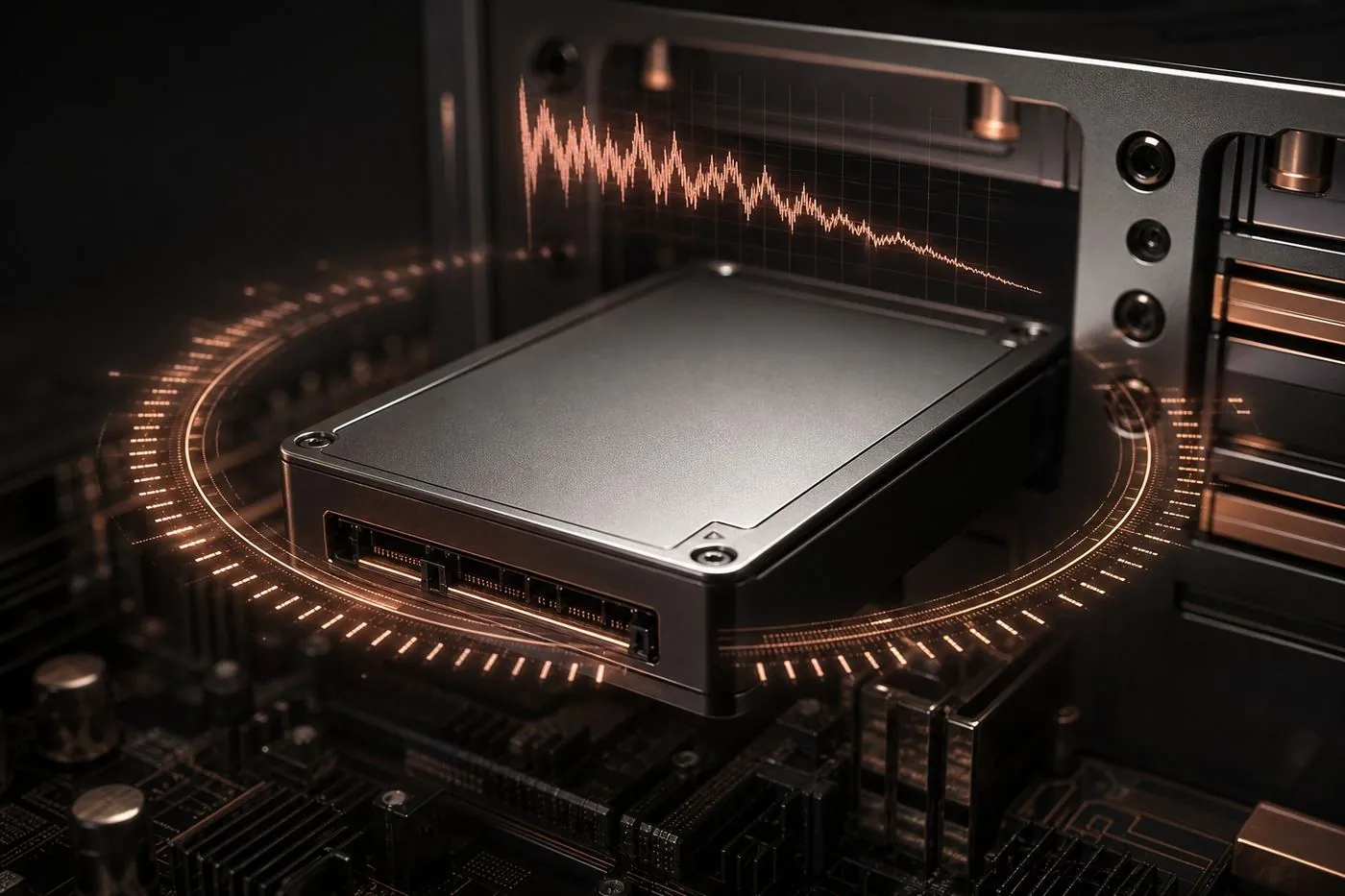
Failures, days ahead
Rising temperature, power drift, latency deviation and clustering link errors are read together into one risk score per drive and slot.
- Result
- Replacement planned, data migrated in advance
Load, placed on evidence
Thermal headroom and device health feed the switch's traffic decisions, so busy work moves away from hot or degrading devices.
- Result
- Even wear, fewer hotspots, steadier throughput
Failures rarely arrive without warning.
The signals are usually there, spread across temperature, latency and link errors. Reading them together turns a surprise failure into planned maintenance.
- Temperature increasingSSD 17 runs 9 °C above its bay neighborsNormal
- Latency deviationRead latency drifts above its learned baselineEarly anomaly
- PCIe error pattern changesCorrectable errors begin to cluster on the linkDegradation
- Health anomaly detectedDFX-G7 combines the signals; risk crosses thresholdPredicted failure
- Predictive maintenance alertDCIM schedules a replacement windowAction

Reactive maintenance
Fix after failure
- Drive drops, RAID rebuild starts under load
- Unknown cause, generic dispatch
- Unplanned downtime and emergency spares
Predictive maintenance
Fix before failure
- Risk detected days ahead with evidence
- Exact bay, part and cause in the work order
- Scheduled, short, low-impact window
Illustrative scenario, not a validated production prediction.
From sensor to scheduled work order.
Temperature, voltage, current, airflow, drive health per bay.
Authenticated, encrypted, out-of-band sensor channel.
Joined with port, queue and link telemetry.
Thermal, fault and load risk with confidence.
Fleet correlation, ranking and scheduling.
Drain, replace, verify, learn.
PCIe connectivity
High-speed device connectivity designed alongside DFX-G7.
NVMe device monitoring
Per-drive health log collection and behavior tracking.
Confidential sensor fabric
Isolated, authenticated sensor network across the board.
Link-health monitoring
Link width and speed, retrains and error counters per slot.
Remote management
Out-of-band access, locate control and firmware update.
Hot-plug management
Managed surprise and ordered removal for planned swaps.
A backplane that reports before it fails.
Talk to us about Smart Backplane designs for AI servers and NVMe storage platforms.