Home/Products/Datafabrix Intelligence
The connecting layer
Infrastructurethat learns.
Datafabrix Intelligence is the AI that runs across the backplane, the DFX-G7 switch and DCIM. Each level makes the decisions that suit its timescale: microseconds on the switch, minutes on the board, days across the fleet.
Conceptual illustration
Decide close to the data. Learn across the fleet.
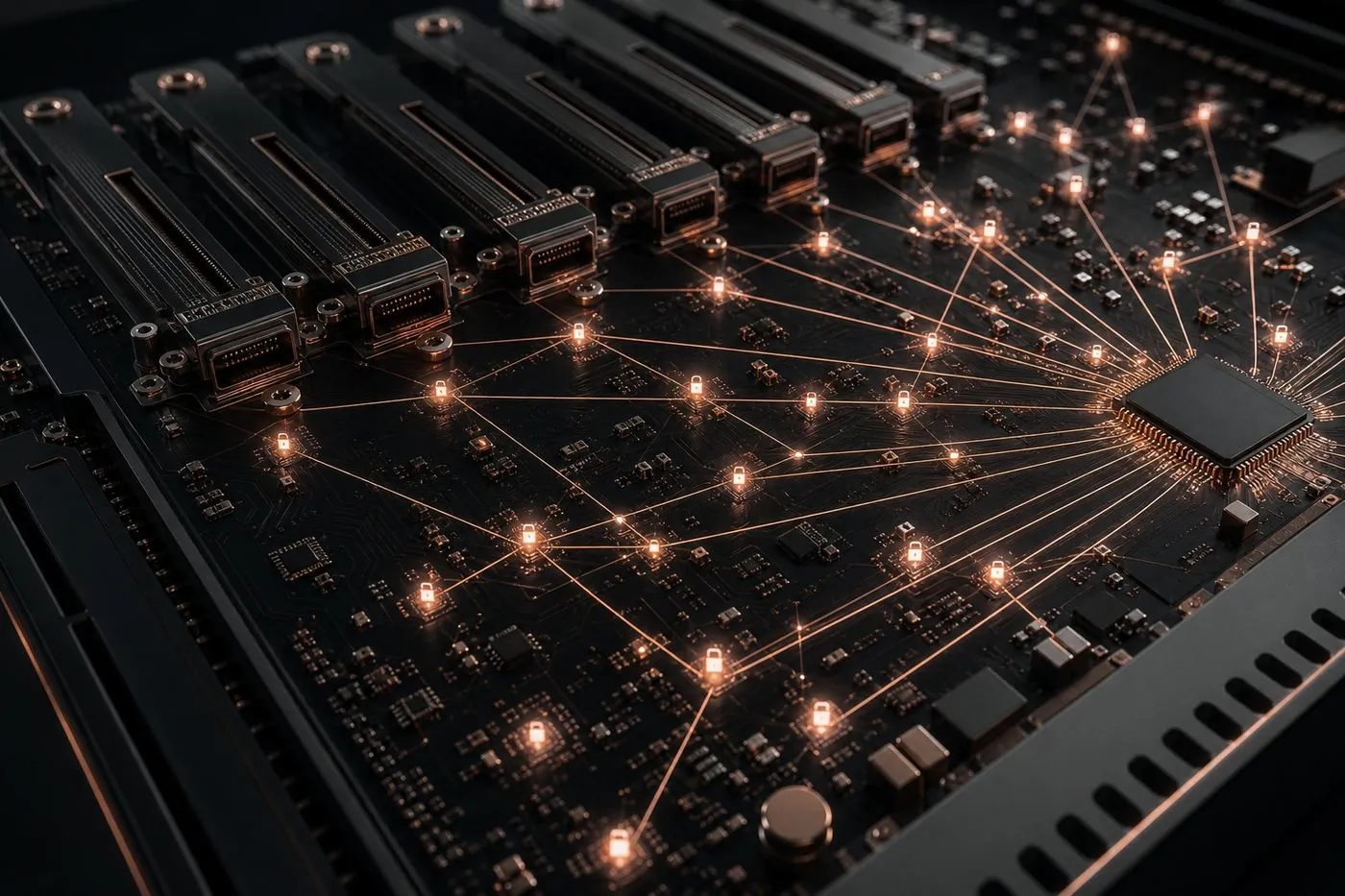
Sense
The confidential sensor fabric measures the physical state of every bay and sends trusted readings to the switch.
- Timescale
- Milliseconds to minutes
- Signals
- Temperature, power, airflow, drive health
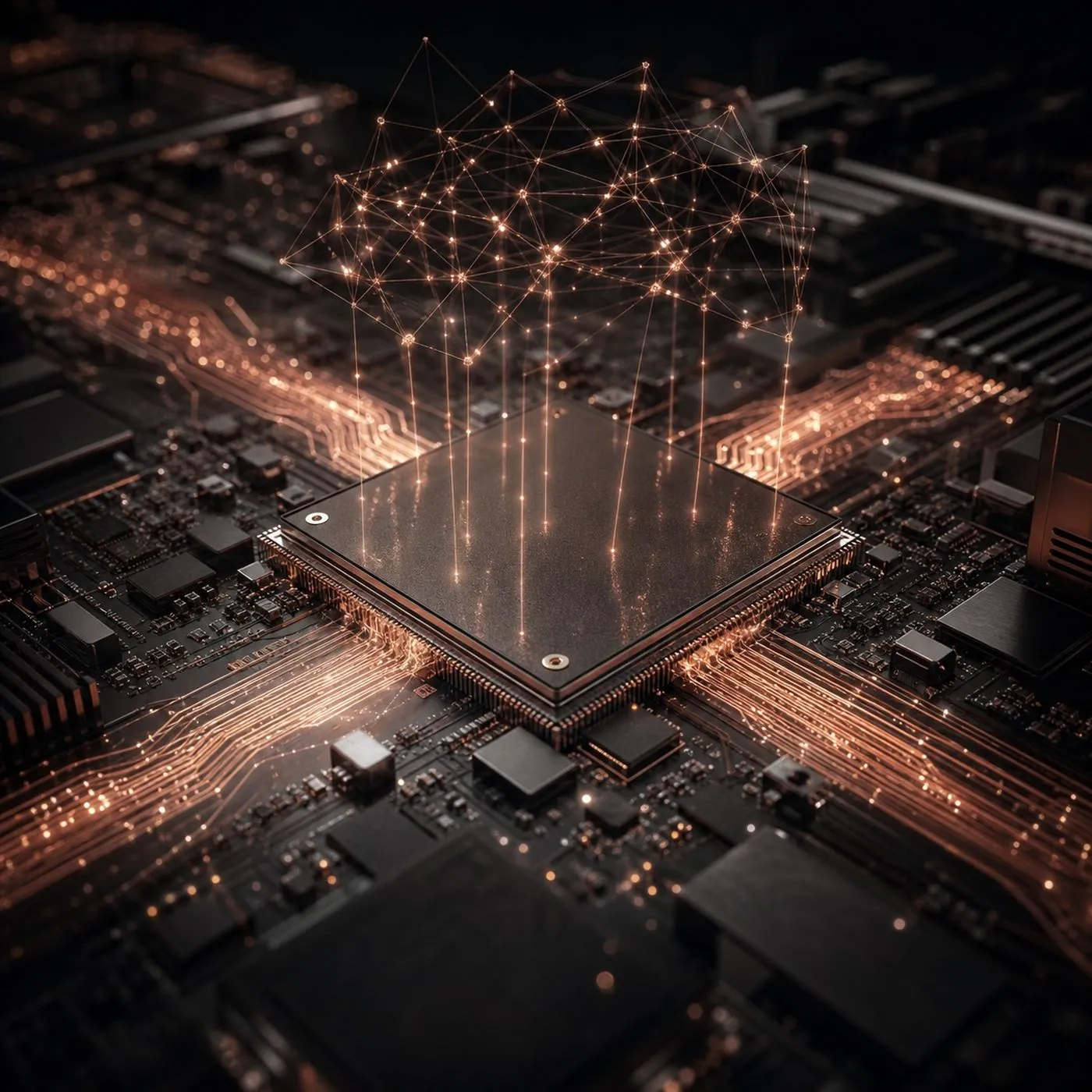
Infer
The on-switch AI engine joins sensor data with fabric telemetry and scores thermal, fault and congestion risk in real time.
- Timescale
- Microseconds to seconds
- Actions
- QoS, port isolation, alerts
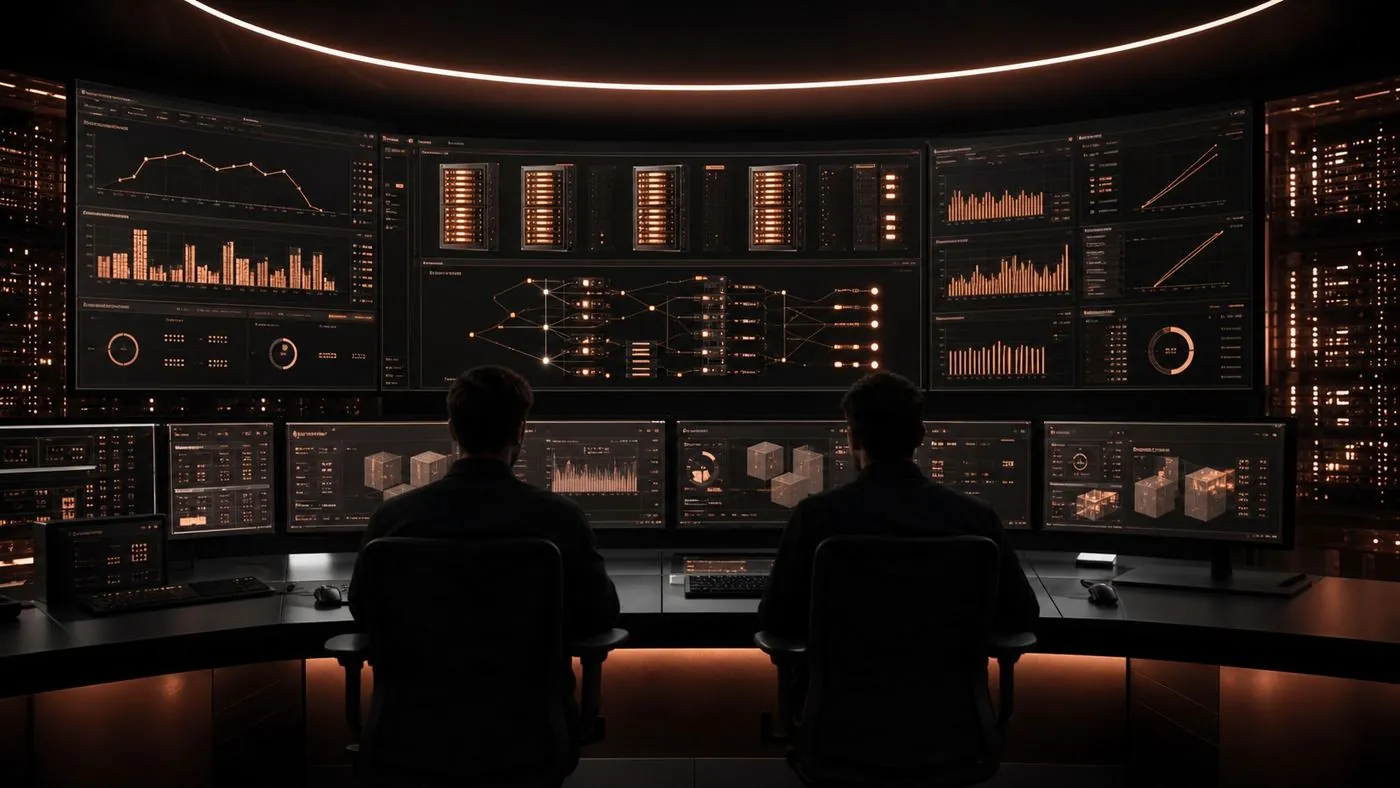
Plan
Fleet models correlate many systems with facility data to forecast failures and capacity, and schedule maintenance.
- Timescale
- Hours to months
- Outputs
- Work orders, forecasts, placement
Sense. Analyze. Predict. Decide. Act.
Every action is logged and reversible, and every outcome feeds back into the models.
Counters, sensors and logs from silicon to facility.
Features, baselines and cross-layer correlations.
Thermal, fault and load risk, each with a confidence.
Policies weigh predictions against operator guardrails.
QoS changes, alerts and work orders, logged and reversible.
03 · Data flywheel
Every deployment improves the models.
Few systems collect telemetry that starts in the PCIe fabric and the backplane. As instrumented infrastructure grows, prediction gets earlier and more precise, and maintenance becomes more planned.
- Outcome labels. Every replaced part confirms or corrects a prediction.
- Per-site baselines. Models adapt to each facility's thermal and workload profile.
- Customer boundaries. By design intent, fleet learning is opt-in and respects data boundaries.
Observable. Predictive. Increasingly autonomous.
From silicon to facility, on one intelligence model.