Primary focus
AI Data Centers
GPU and accelerator servers where PCIe links hosts, accelerators, NICs and local NVMe, and where heat and congestion cost the most.
Target marketView →
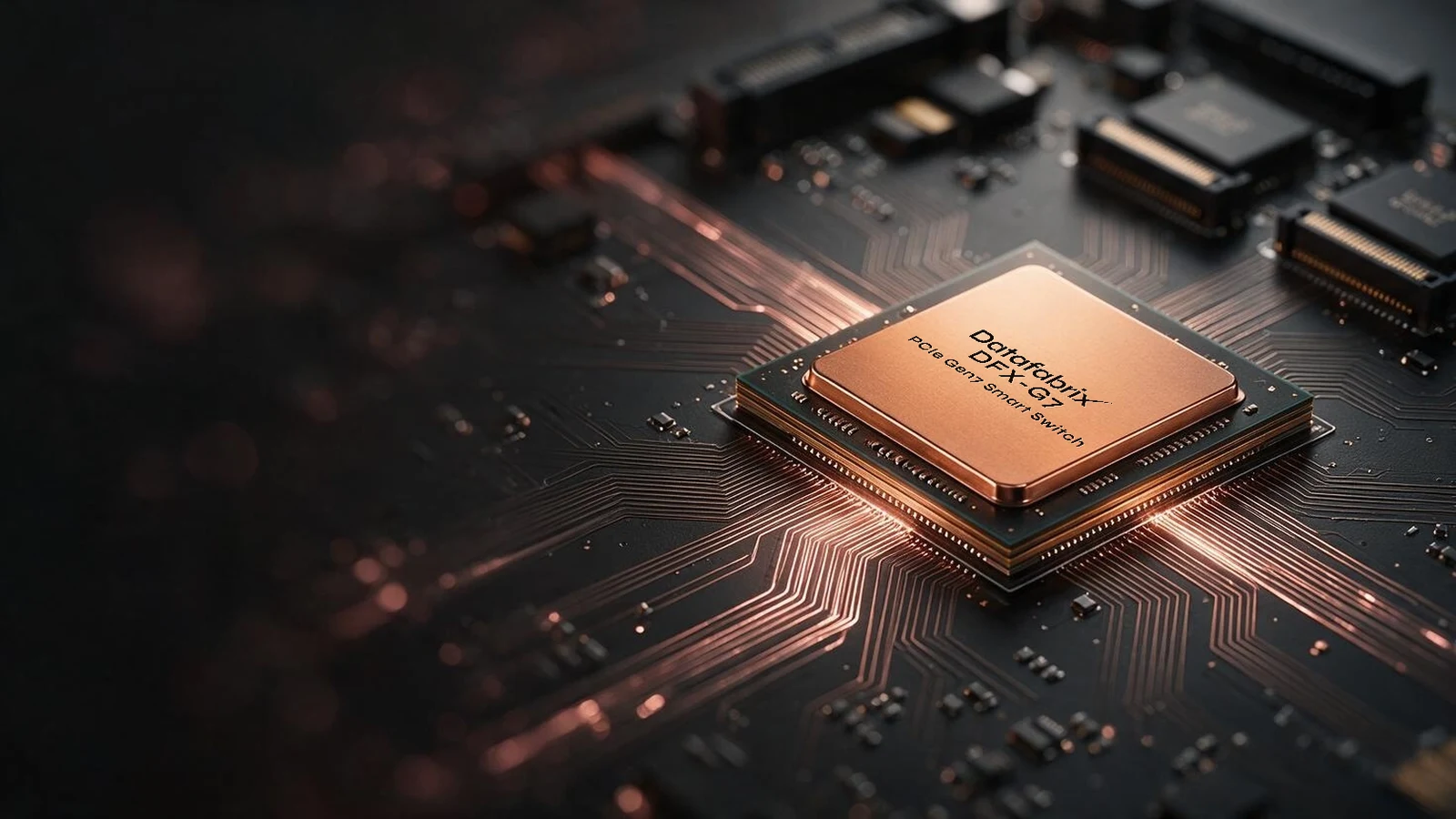
PCIe Gen7 Smart Switch · in development
Datafabrix is building an AI-native infrastructure platform: the DFX-G7 PCIe Gen7 Smart Switch, a Smart Backplane with a confidential sensor fabric, and a DCIM software stack that turns their telemetry into predictive maintenance.
Conceptual illustration
Four layers, one telemetry model. The backplane senses, the switch sees and infers, DCIM correlates across the fleet, and operators act before anything breaks.

Each product is useful on its own. Together they close the loop from a sensor reading on a board to a planned maintenance window in the facility.
Gen7 switching silicon designed with AI features that read deep telemetry from the fabric and the backplane.
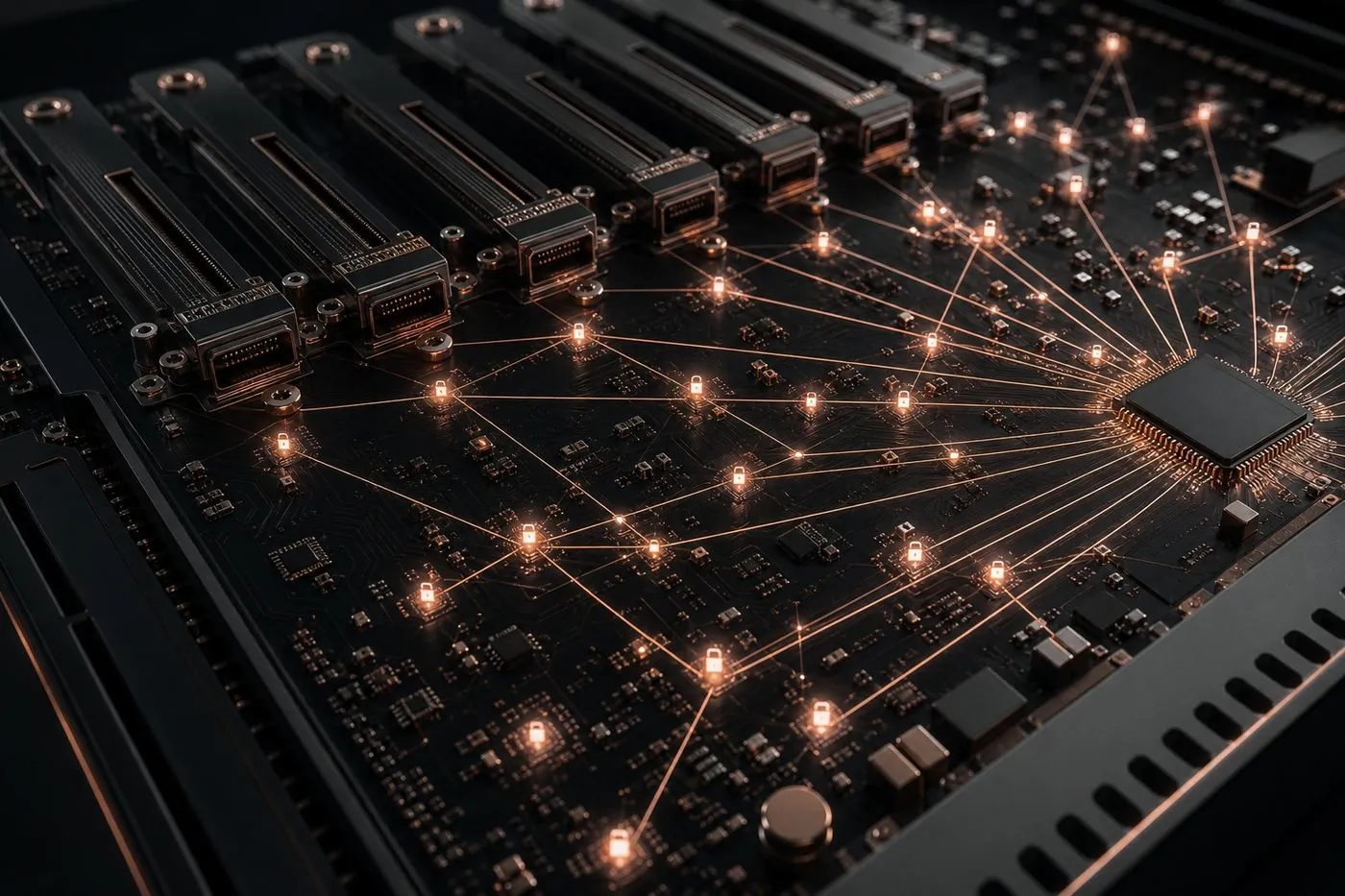
NVMe and PCIe connectivity with a confidential sensor fabric that streams board-level health to the DFX-G7.
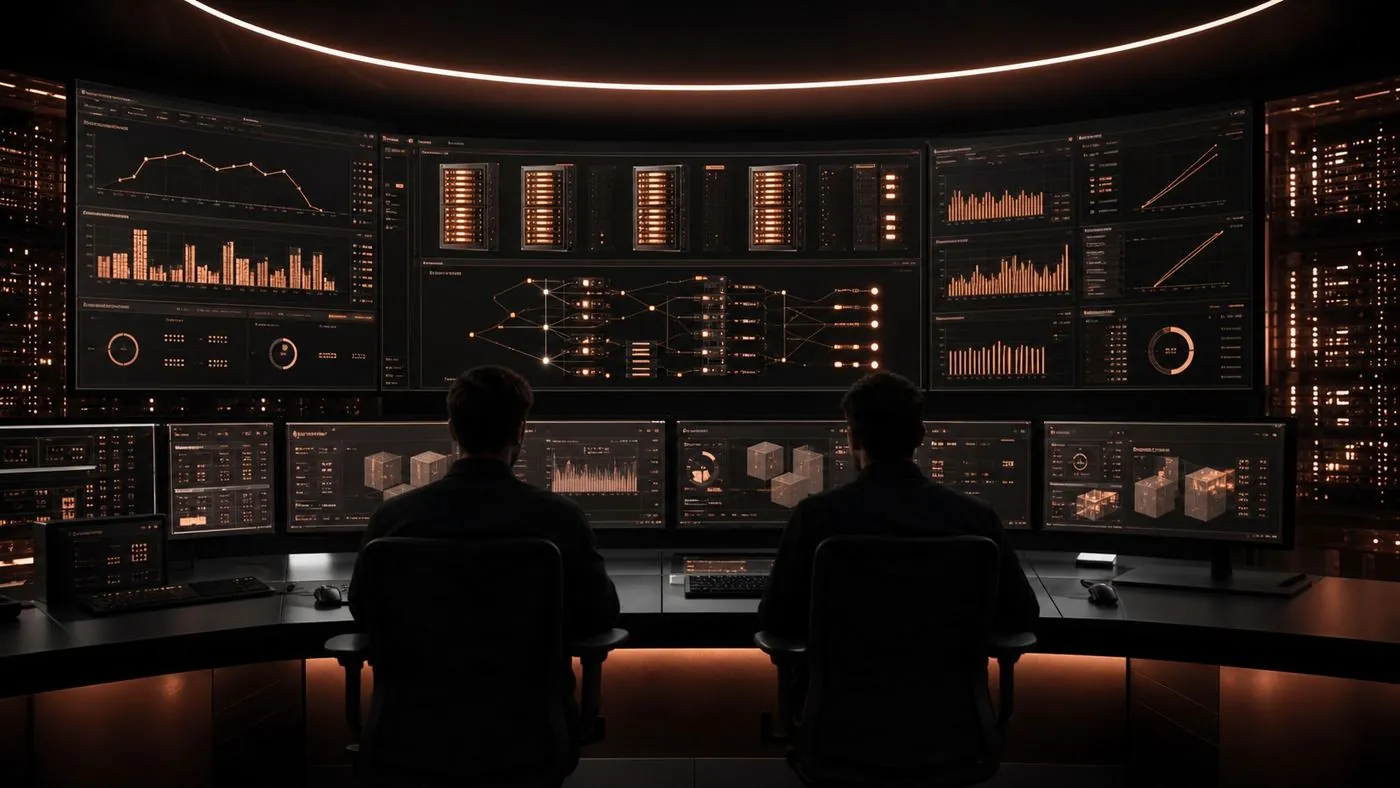
A DCIM software stack that does the conventional job and adds AI predictive analysis on Gen7 and backplane telemetry.
The DFX-G7 AI engine and DCIM models are being designed around the three failure modes that cost AI data centers the most: heat, hardware faults and imbalanced load.
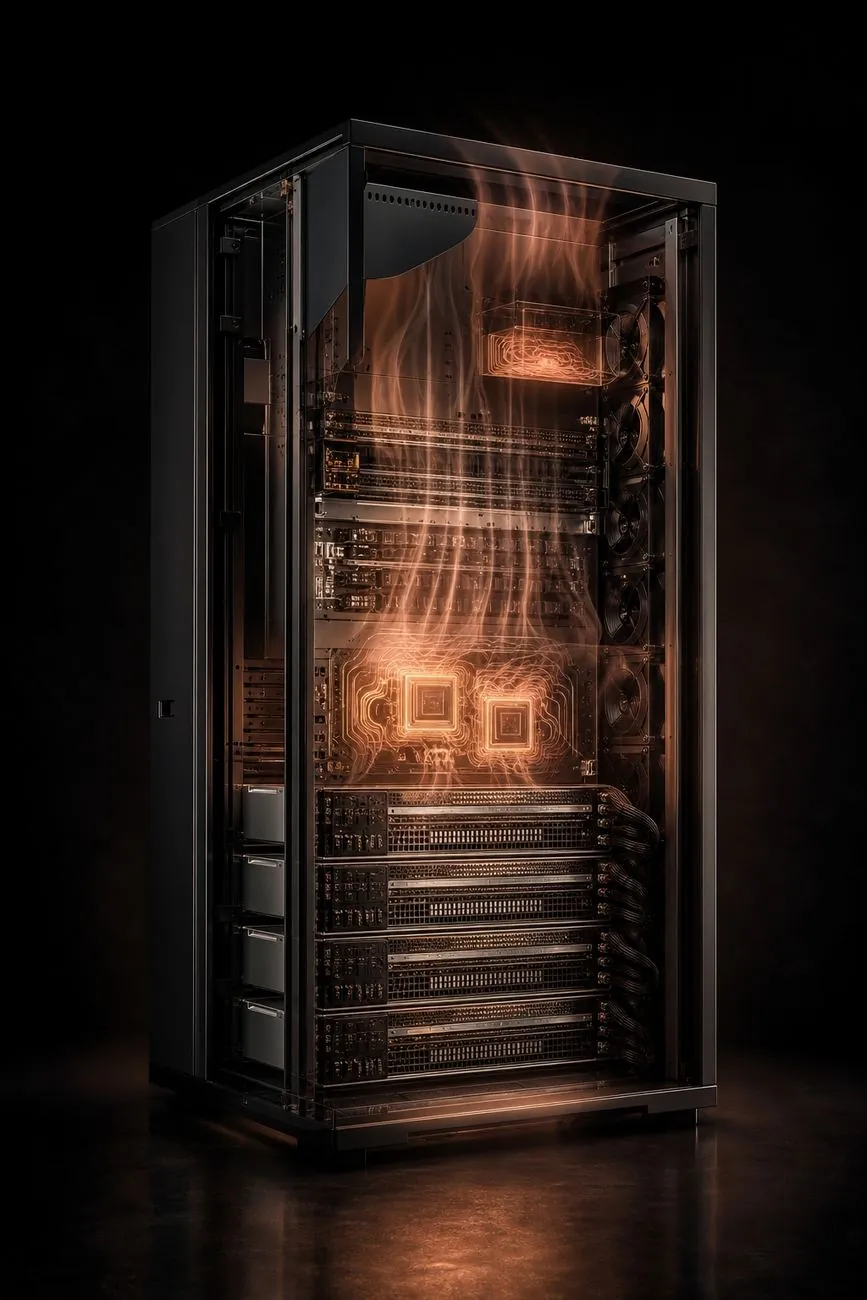
Bay and component temperatures, fan state and traffic intensity forecast hotspots hours ahead, so cooling adjusts before throttling.
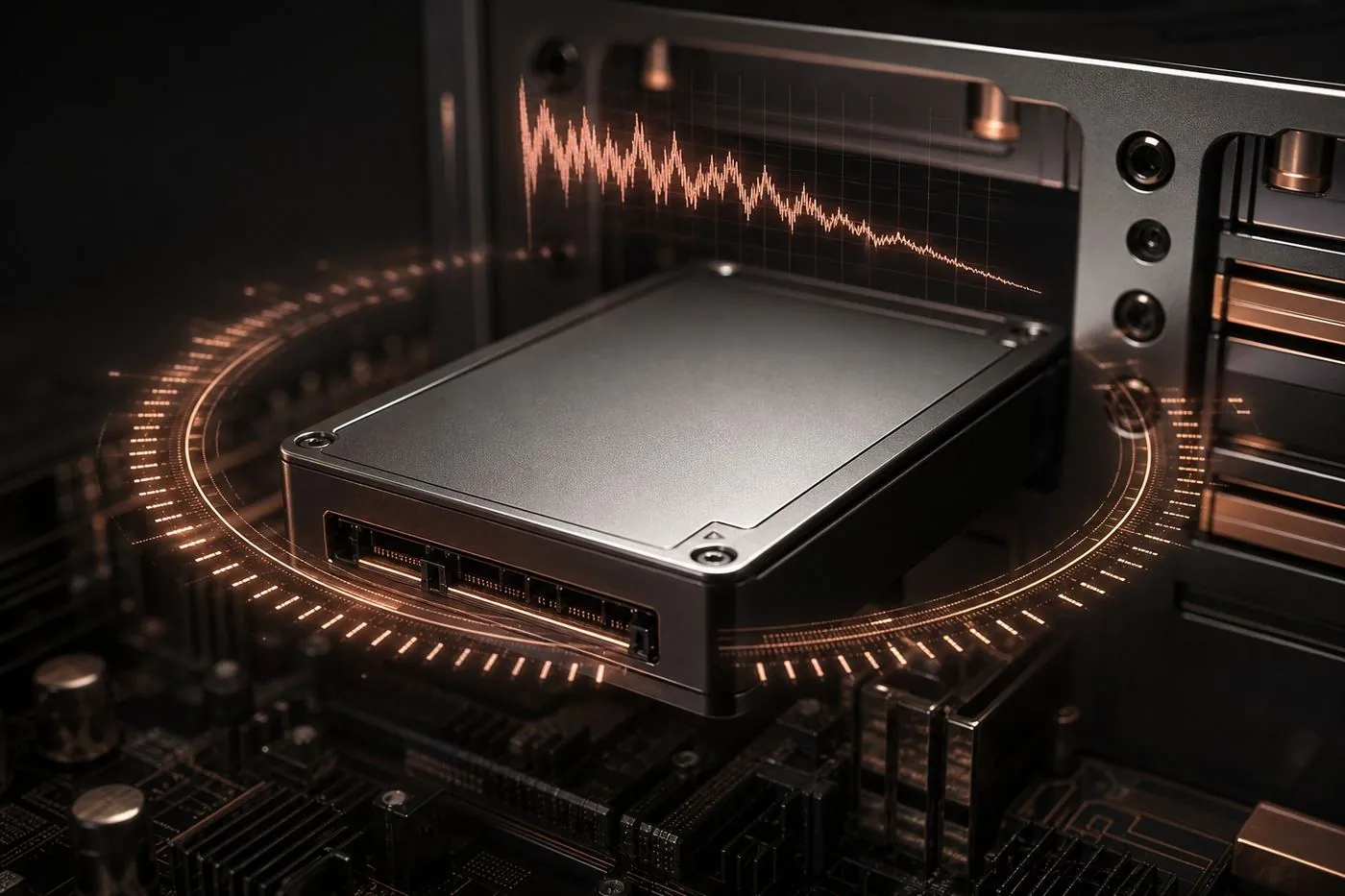
Correctable-error clusters, link retrains, latency drift and drive health logs combine into a per-device failure risk score.
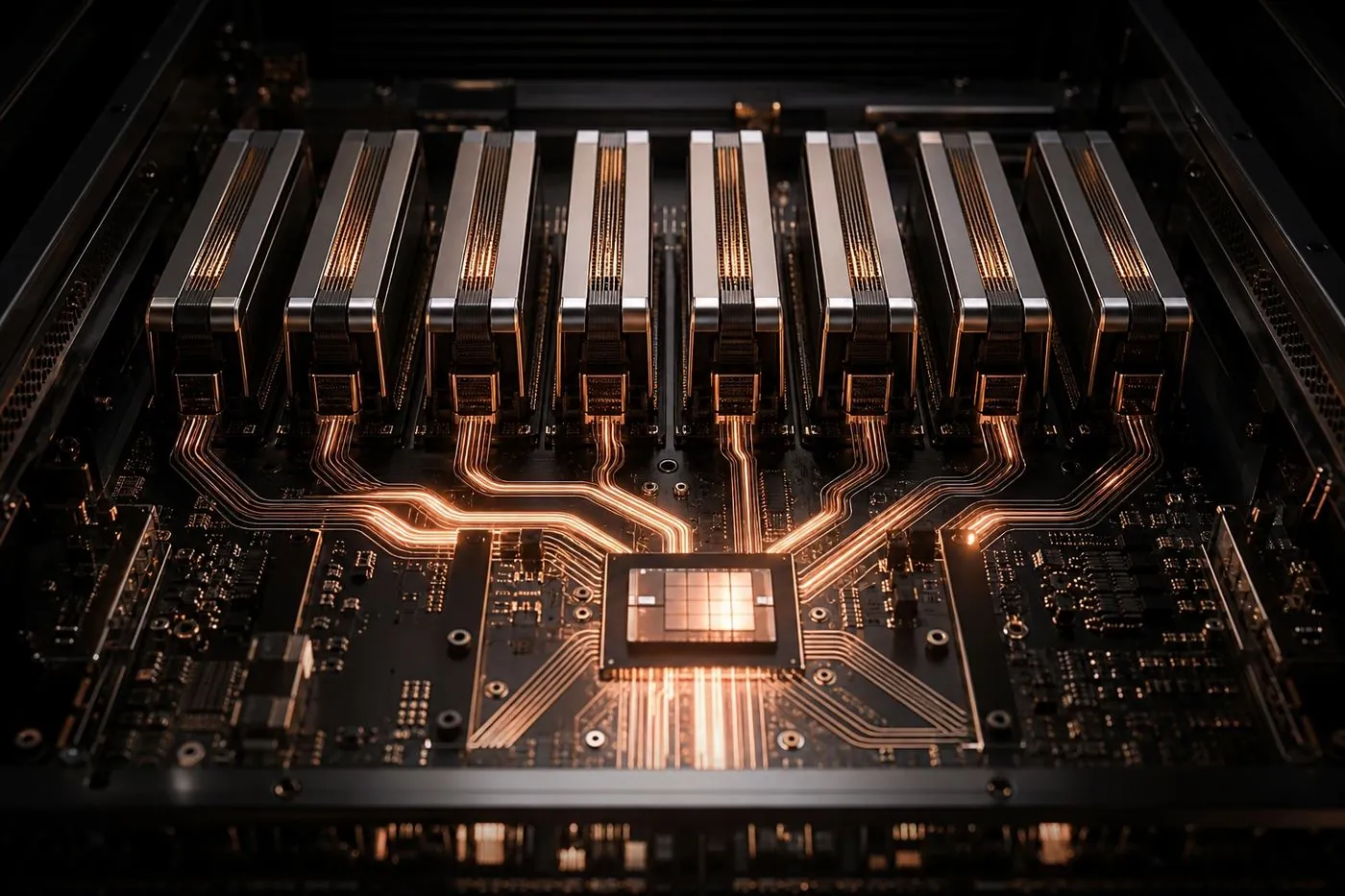
Queue growth and per-port utilization predict congestion, so traffic classes and placements are rebalanced before jobs stall.
Design targets for the Datafabrix platform. Capabilities are in development and not yet validated in production.
Most data centers still learn about a failing drive, link or fan when it fails. Datafabrix moves that moment earlier, from the incident to the plan.
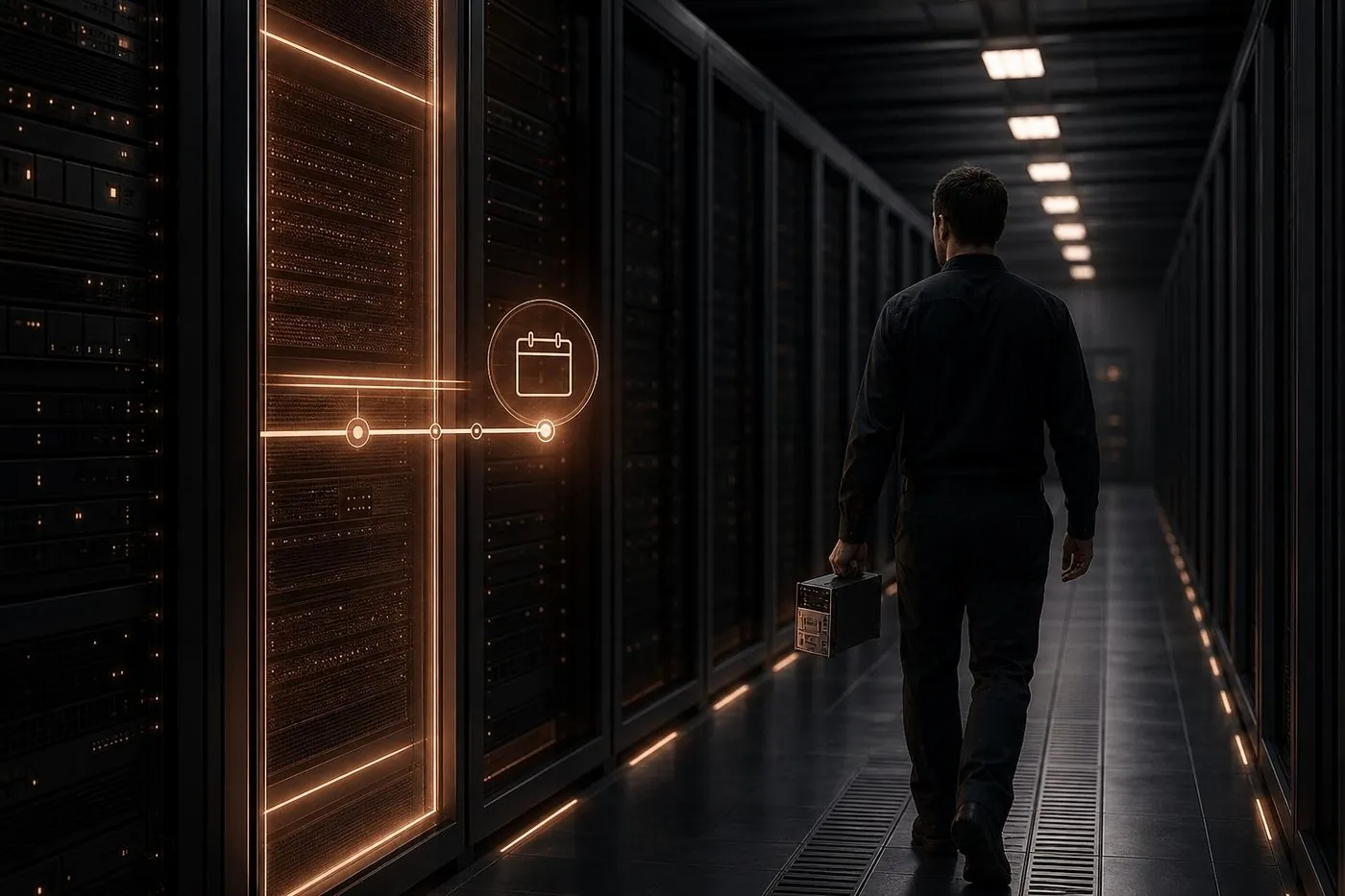
Backplane sensor fabric streams bay-level health.
DFX-G7 adds port, queue and link telemetry.
On-switch AI scores thermal, fault and load risk.
DCIM ranks risks and books a maintenance window.
Drain, replace, verify. The model learns from the outcome.
GPU and accelerator servers where PCIe links hosts, accelerators, NICs and local NVMe, and where heat and congestion cost the most.
JBOF and high-density SSD platforms with per-drive telemetry and predicted replacement windows.
Multi-host device pools, HPC node I/O and serviceable enterprise platforms.
We work with hyperscalers, OEMs and silicon partners on Gen7 architecture requirements. Bring us your topology.